
- Home
- Health Topics
- Health Hazards
- Hydrogen Sulphide (H2S)
Hydrogen Sulphide (H2S)
Do you have questions about Hydrogen Sulphide (H2S)?
What is hydrogen sulphide (H2S)?
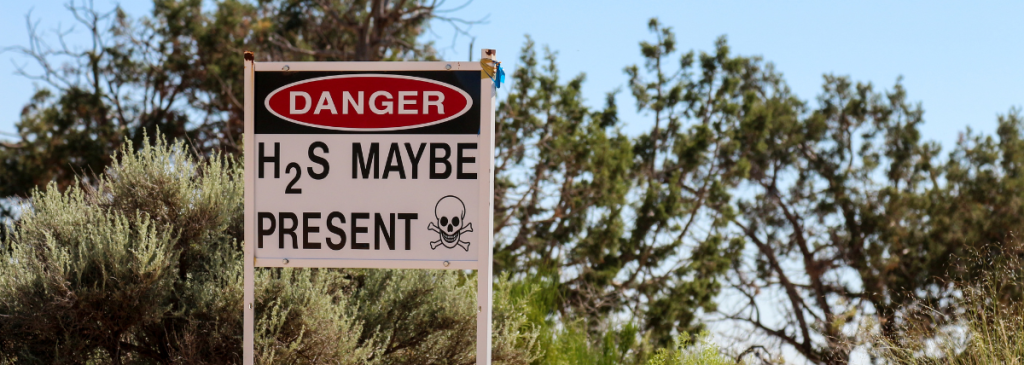
Hydrogen sulphide is a colorless, flammable gas with a “rotten egg” smell. It can be harmful at high levels.
Hydrogen sulphide is formed when bacteria break down organic matter in low-oxygen environments. It occurs naturally in environments like gas wells, swamps, sulphur springs, and groundwater. It can be found near animal farms, industrial facilities such as petroleum refineries, and sewers and wastewater treatment plants. It is also naturally produced in the human body during digestion.
How might I be exposed to hydrogen sulphide?
H2S is commonly found in outdoor air at low concentrations. You may encounter H2S near natural sources, such as wetlands, hot springs, and groundwater, or you may be exposed to higher concentrations released from major sources such as gas wells or landfills. Exposure can occur through inhalation, ingestion, or skin contact. Inhalation is the most common, while ingestion of contaminated food or water or absorption through the skin are rare.
After H2S enters the body, the liver will quickly break it down and it will be removed from the body in urine. This means H2S does not build up in the body.
What are the short-term health risks of hydrogen sulfide?
Exposure to high concentrations (10-100 parts per million) of hydrogen sulphide may cause:
- Irritation to the eyes, nose, or throat
- Trouble breathing for people with asthma
- Headaches
- Poor memory
- Fatigue (tired)
- Dizziness
Brief exposures to very high concentrations of hydrogen sulphide (greater than 500 parts per million) can cause troubled breathing or loss of consciousness. In most cases, people regain consciousness without lasting effects. However, some may experience permanent or long-term effects such as headaches, poor attention span, memory issues, and impaired motor function. At extremely high concentrations, death is possible due to respiratory paralysis, but such levels (greater than> 1,000 parts per million) are exceedingly unlikely to occur outside of severe industrial or confined space accidents and are not expected in community environments.
Does exposure to hydrogen sulfide (H₂S) over many years pose health risks?
Exposures to low hydrogen sulphide concentrations (0.1 parts per million) over many years is not associated with acute or dangerous health effects. However, some studies have shown that long-term exposures to low levels (ranging from 0.001 to 0.1 parts per million) may cause odour discomfort, and temporary symptoms such as irritation, headaches, respiratory discomfort, or sleep disturbances. These effects are generally mild and reversible, and current evidence does not support long-term health impacts. Symptoms typically resolve once the odour event or exposure ends, however, people with underlying health conditions, such as asthma, may be more susceptible.
What does it mean if I can smell hydrogen sulphide (rotten egg odour)?
Most people can detect the smell of H2S at very low concentrations (about 0.0005 – 0.3 parts per million). These levels usually do not have toxic health effects, but unpleasant odours themselves can cause temporary health impacts including symptoms such as headaches, nausea, stress, sleep disturbances, or difficulty concentrating.
While health impacts in some individuals are minimal, persistent odours can affect quality of life, leading to stress or changes in routine, such as avoiding outdoor activities. These effects are temporary and typically resolve once the odour is gone, with no need for medical intervention.
It is important to recognize that the ability to smell H₂S is not a good way to know how much is in the air. While the odour is distinctive, it cannot be used to assess exposure level, especially since prolonged exposure can result in a loss in ability to detect H2S due to olfactory fatigue.
How can I reduce my exposure?
If you notice strong hydrogen sulphide odours, you can reduce your exposure by:
- Closing windows when you notice outdoor odours
- Avoiding outdoor activities, such as exercise
- Report the odour issue to the Spills Action Centre of the Ministry of the Environment, Conservation and Parks at 416-325-3000 or 1-800-268-6060 (toll-free)
Can air filters reduce my exposure?
Yes, air cleaning filters can remove H2S if they have an activated carbon filter or other filter designed to remove gases. Activated carbon filters will remove gases and their associated odours, provided there is a large amount of activated carbon material used in the filter. Proper maintenance and period replacement (performed according to manufacturer’s instructions) is required to maintain the effectiveness of filters containing activated carbon.
Traditional air filters are designed to remove particles from air and are not effective in removing gases such as H2S.
Does wearing a mask (or respirator) reduce exposure when outside?
N95 Masks are a type of particulate filtering facepiece respirator (FFRs, also called dust, fume, and mist respirators or masks). This type of respirator can filter out particles but will not remove gases such as H2S from the air you breath.
What if I smell hydrogen sulphide in my well water?
The ‘rotten egg’ smell of hydrogen sulphide and the ‘sulphur water’ taste that comes with it can occur at low concentrations (0.05 – 0.1 mg/L). At these low levels, water may be unpleasant to drink, and most people will avoid drinking it.
The odour may be more noticeable when running hot water because heat releases the gas into the air. This may cause the odour to be stronger during hot showers. If there is an ongoing issue with hydrogen sulphide in your water supply, there are a variety of water treatment devices that can remove it. Consult a licensed plumber or a water treatment company to find the best solution for your needs.
Water samples submitted to Grand Erie Public Health are only sampled for bacteria at the Public Health Lab. Chemical sampling can be done for a fee through a licensed private lab. For more information about well water testing, contact GEPH at 519-900-9600.
What do I do if I suspect a hydrogen sulphide gas leak?
If you notice a rotten egg scent and suspect hydrogen sulphide:
- Near your home, call the Spills Action Centre of the Ministry of the Environment, Conservation and Parks at 416-325-3000 or 1-800-268-6060 (toll-free)
- Inside your home, call your local fire department — In Norfolk County │ In Haldimand County
Gas Well Resources and Contacts
The Abandoned Works Program is a program offered by the Ministry of Natural Resources, to help Ontarians properly plug wells on their property. Landowners with gas wells can contact the Ministry to determine if their well qualifies for the program. Please visit https://www.ontario.ca/page/abandoned-works-program for more information.
If you smell hydrogen sulphide (rotten eggs) near your home and suspect a leaking gas well, contact the Spills Action Centre (SAC) of the Ministry of the Environment, Conservation and Parks at 416-325-3000 or (toll-free) 1-800-268-6060 or (TYY) 1-855-889-5775